
Diet Tracking
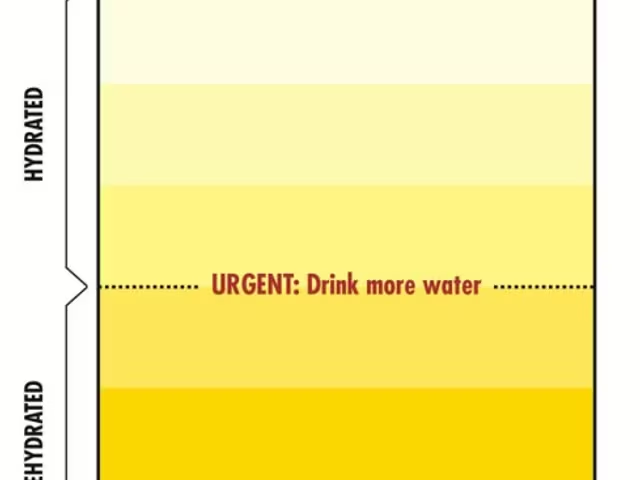
Hydration Testing Method Comparison: Urine Color Vs. Saliva
In this article, we’ll discuss the pros and cons of urine color vs saliva for hydration testing.

Sodium Potassium Ratio: Discover Your Ideal Number
The sodium potassium ratio is the amount of sodium divided by the amount of potassium, and its measurement in urine is an excellent measure of dietary intake, dietary quality, and chronic disease risk.In this post, full of scientific references, we’ll explain what a low and high sodium potassium ratio means, what foods have the best sodium potassium ratio, and how to measure your sodium and potassium ratio on a regular basis.Sodium and Potassium Ratio and Your Dietary QualityMaintaining high die

Sodium Tracker (A Simple, Automated Solution)
Using a sodium tracker can help you elucidate dietary behaviors that are otherwise hard to monitor and track.

How to Track Sodium Intake (10 Step Guide)
If the food is pre-packaged with a nutrition label, skip this step. But, if you prepared your meal from a recipe...

Does Calorie Counting Work? Your Complete Guide
Counting calories typically takes a lot of time and effort. You have to search and find your foods in an app, estimate the quantity you’ve eaten, or worse, spend time filling old fashioned, pen and paper notebooks tracking your calories and macronutrients.Plus, you need to spend brain space on thinking about what you’re eating all day, remembering it, or interrupting your days consistently to track each morsel.Is it worth it?Calorie counting is a controversial topic in the world of diet and nutr

Nutrition Tracking: The Ultimate Guide and Resource Page
Others meticulously record the quantity and nutritional breakdown of all the food they eat. No matter which technique people use to track...

How to Track Sugar Intake - An Easy Step-by-Step Guide
Step 1: Identify the individual food items in your meal. · Step 2: Calculate the quantity of each serving of foods with nutrition labels...

How to Track Dietary Fat Intake (A Step-by-Step Guide)
This step-by-step guide, part of our series on nutrition tracking, will teach you how to track dietary fat intake.Dietary fats are praised in some circles and vilified in others.And while arguments continue on the _amount _of fats you should eat, and _which _fatty acids are best, they dietary fats are nevertheless an important part of your diet.The USDA Guidelines recommend that you should eat 20 - 35% of your calories from fats.But how do you track fat intake? Especially for home-cooked meals?
How to Track Macronutrients - The Definitive Step by Step Guide
Knowing how to track macronutrients - proteins, carbohydrates, and fats - is important for eating a well-balanced diet and hitting your specific dietary goals.But how do you count macronutrients? Especially for home-cooked meals? And how do you track macronutrient intake over time?This step-by-step guide walks you through this process to show you how to track macronutrients from your diet. It essentially comes down to two primary questions: What is the macronutrient breakdown of the food you ate

Logging Food: The Tools and Strategies to Do It Right
For example, maxing out athletic performance usually requires more quantitative and more accurate food logging techniques.

How to Track Protein Intake - The Definitive Step by Step Guide
Step 1: Identify the individual food items in your meal. · Step 2: Calculate the quantity of each serving of foods with nutrition labels...

Do Food Journals Work? Learn How to Make them Work for You
Nearly three decades of academic, peer-reviewed literature have demonstrated, time and again, that tracking your dietary intake...

Carbohydrate Counting: How to Track Carb Intake
Step 1: Identify the individual food items in your meal. · Step 2: Calculate the quantity of each serving of foods with nutrition labels.